Close your eyes for a moment. Can you think back to the last time you saw a healthcare advertisement?
You might have thought of a specific slogan or image. Or maybe not.
Digital marketing experts estimate that Americans get exposed to 4,000 to 10,000 ads per day. Most likely, you’re unconsciously looking at these ads, and you tend to skip them if they are not relevant to you.
Companies put a lot of effort into creating advertising campaigns that successfully catch the attention of the viewers.
Healthcare advertising is how healthcare providers, services, and products are promoted. Good advertising helps build trust with potential patients, raises brand awareness, and brings in new patients.
This guide offers a clear plan for creating healthcare ads that work. We will cover the most common advertising channels, visual design, and how to write a message that connects with your audience and prompts them to act.
Healthcare advertising has changed.
Healthcare advertising has moved from traditional media to digital platforms. Today’s strategies use a mix of channels to reach patients where they spend their time online.
Modern healthcare advertising includes digital marketing like search engine optimization (SEO) and Google Ads. It also uses social media campaigns, video content, and email marketing.
The goal is to create a smooth patient experience everywhere a patient interacts with your brand.
Top Healthcare Advertising Channels To Invest In
Choosing the right channels is key to reaching your target audience. A multi-channel approach usually gets the best results by combining different strategies to build a brand presence and attract new patients.
Local SEO
Most healthcare providers serve a local community. Local SEO helps your practice show up in local search results, like on Google Maps. This makes it easier for nearby patients to find you when they search for your services.
Paid advertising
Paid advertising, or pay-per-click (PPC), lets you place ads at the top of search engine results. With Google Ads, you can target potential patients based on the specific keywords they search for, their location, and other details for a very focused reach.
Social media
Social media platforms like Facebook and Instagram are great tools for building a community and sharing information. You can use these channels to post health tips, introduce your staff, and run targeted ads to connect with specific patient groups.
Content marketing
Content marketing builds trust by providing useful information. You can create educational blog posts, articles, and videos that answer common patient questions. This shows your practice is a reliable resource and helps attract patients naturally.
Video marketing
Video is a very engaging format for healthcare. Patient testimonials, videos explaining complex procedures, and “meet the doctor” clips can create a strong connection with your audience. Videos help make your practice feel more personal and make health information easier to understand.
4 Ways to Attract and Retain Patients
Beyond specific ad channels, some strategies are vital for building a successful practice. These methods focus on using your existing patient base and building a strong reputation.
1. Develop a patient referral program
Word-of-mouth is a powerful marketing tool. A patient referral program encourages your current patients to recommend your services to friends and family. This can be a low-cost way to get new patients who already have a trusted recommendation.
2. Manage online reviews and testimonials
Online reviews on sites like Google and Healthgrades heavily influence patient choices. Actively ask satisfied patients to leave reviews and respond professionally to all feedback. Using positive testimonials in your ads builds social proof and credibility.
3. Use email marketing for patient communication
Email marketing is a great tool for keeping patients. Use email to send appointment reminders, share practice news, and send out health and wellness newsletters. This keeps your practice on their minds and builds stronger patient relationships.
4. Ensure HIPAA compliance in marketing
All healthcare advertising must follow the Health Insurance Portability and Accountability Act (HIPAA). This means you cannot use protected health information (PHI) in your marketing without clear patient permission. Always make sure your campaigns protect patient privacy and follow all legal rules.
4 Tactics You Should Be Using In Your Advertising
The visual design of your ad is the first thing people see. Strong visuals can grab attention, send a message quickly, and make your brand more memorable.
1. Color Psychology
Colors affect our emotions and what we think. They can send a strong message without words, making them an important part of ad design.
Blue is a common color in healthcare because it is linked to trust, knowledge, and professionalism. It also suggests calm and reliability, which are qualities patients want in a provider.
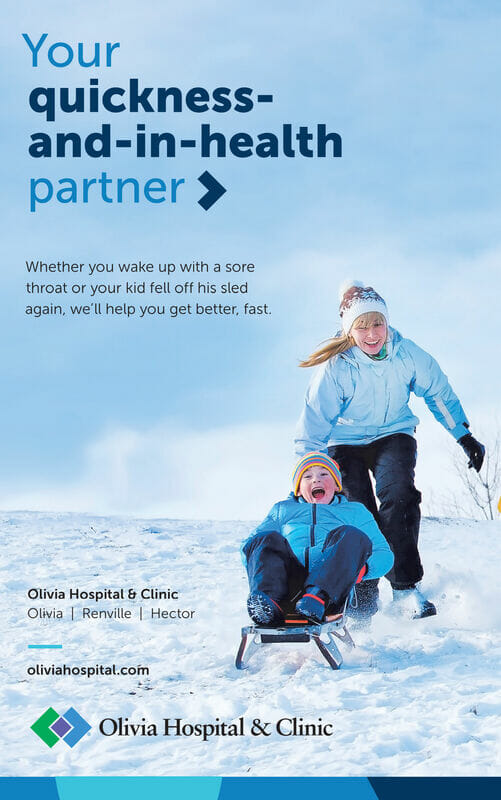
These characteristics are expected in every healthcare organization, making blue a popular color for designing healthcare logos and ads. Take a look at how John Hopkins Medicine and Olivia Hospital & Clinic used the blue color in their ad materials:

2. Focal Point
A focal point is the part of an ad that grabs the viewer’s eye and delivers the main message. You can use design principles like color, size, and direction to highlight your focal point.
For example, an award-winning ad for AstraZeneca’s Brilique used a heart shaped like a boxing glove to represent the fight for life, making it the clear center of the message.

3. Typographic Composition
Typography is how you arrange text to tell a story. The words and numbers in your ad can be a visual element, improving the design and supporting your message.
You can use different text sizes, shapes, and spacing to create a typographic composition. This technique helps guide the viewer’s eye and makes your ad more interesting to look at.
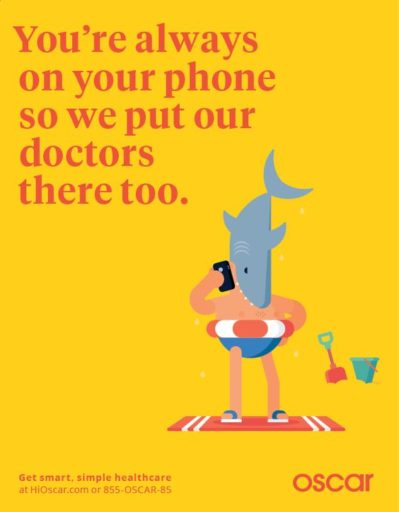
4. Symbolism
Symbols are a visual way to represent an idea, process, or message. Using metaphors or similes in your ads helps people connect the visuals to a concept they already know.
This ad for Tylenol used the image of a wrecking ball hitting a person’s head. This symbol instantly showed the intense pain of a headache that Tylenol is meant to solve.

How to Craft a Compelling Ad Message
Once you have the visuals, the message itself must be clear, simple, and persuasive. The right words can be the difference between an ad that is ignored and one that gets results.
The message
Delivering the right message is key for any ad. Pay close attention to detail and only include the most important information in your campaigns. A clear and direct message is more likely to be understood and remembered.
Here’s an example of a banner ad with a compelling message:

This video advertisement by Vanquish Digital Headache delivers a clear and compelling message about digital headache in just a minute:
Invoke an emotional response
Good content must effectively capture the audience’s emotions.
If you’re designing ads or banners for marketing, you can attract attention by stimulating emotional reactions. Emotional trigger is one of the most powerful advertising techniques and one of most in-demand within the healthcare industry.
Ads can target many different emotions such as sadness, sympathy, hope, or nostalgia. Messages that promote social responsibility are some of the most effective ways to trigger these reactions.
This campaign of Sutter Health used the message “It’s a thousand things big and small” to tackle the emotional aspect of healthcare.
Humor
Using humor can make your brand more memorable and relatable. People enjoy a good laugh and are more likely to share funny or clever content on social media.
Cigna’s “TV Doctors of America” campaign featured famous actors from medical dramas. The ad used humor to deliver a serious message: see a real doctor for your annual checkup. The campaign successfully led 40% of viewers to think about scheduling a checkup.
Use a quote
A powerful quote can make your ad more shareable and have a bigger impact. Find a quote that is relatable and captures the main idea of your brand’s mission.

Dana-Farber Brigham & Women’s Cancer Center created a campaign around the slogan, “You Have Us.” This simple, powerful phrase became an empowering message for patients fighting cancer and their families.
Call to action
A strong call to action (CTA) tells your audience what to do next. It can increase engagement by encouraging people to click a link, make a call, or schedule a visit.
Use clear, action-oriented words like “discover,” “learn more,” or “apply.” You can also be more direct with phrases like “Set up an appointment” or “Book a consultation.”


Describe your offer
A simple and clear description of your offer can greatly increase conversions. Use as few words as possible while highlighting the most important parts of your message. Be direct about the service you provide and the value it offers.

Advertise something relevant to your audience
Many factors can convince potential patients to choose your clinic or medical facility.
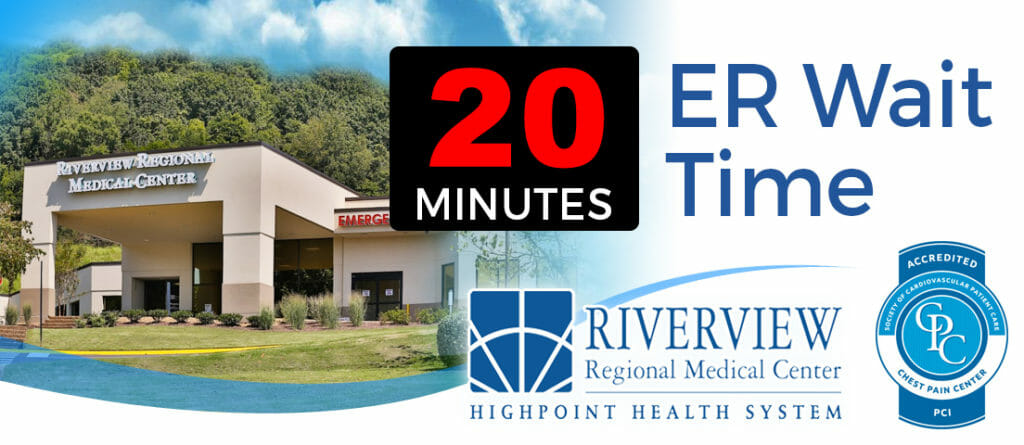
For many patients, waiting time is another factor. Nobody likes waiting too long, especially during a medical emergency.
Advertising short waiting times highly gives your practice an advantage to reach more potential patients.
Here’s an example ad from Riverview Regional Medical Center:
[Relevant: How to Choose the Right Type of Ads to Reach New Patients]
Get More Customers With the Right Medical Ads
Healthcare marketers must create appealing designs that also maintain brand credibility. This requires thinking creatively to develop a campaign that makes your brand stand out from the competition.
Putting these complex strategies into practice requires expertise. If you’re ready to grow your brand and attract more patients, a healthcare marketing expert can help you capture your audience’s attention and build lasting trust.
Need to boost your marketing efforts? We’ve got you covered! Schedule a free call with Digitalis Medical today and get customized expert suggestions to grow your brand.
Frequently asked questions
What are the most effective advertising channels for a medical practice?
The most effective approach is a mix of digital channels. This includes local SEO to attract nearby patients, paid ads on Google for targeted reach, and content marketing to build trust and authority.
Why is local SEO so important for doctors?
Local SEO is crucial because most patients look for healthcare providers in their immediate area. Optimizing for local search helps your practice appear in top results and on maps when potential patients nearby are searching for the services you offer.
How can I use social media for healthcare advertising?
Social media can be used to build a community and engage with patients. Share valuable health tips, introduce your staff, and post practice updates. You can also run targeted social media ad campaigns to reach specific demographics in your area.
Do I need to worry about HIPAA in my online ads?
Yes, absolutely. All healthcare marketing must be HIPAA compliant. You cannot use any patient photos, testimonials, or personal health information in your ads without their explicit written consent. Protecting patient privacy is a top priority.
What is a call to action (CTA) and why does my ad need one?
A call to action, or CTA, is a prompt that tells the audience what to do next, such as “Schedule an appointment” or “Learn more.” A clear CTA is essential because it guides potential patients on how to take the next step, which helps turn ad views into actual appointments.
How important are online patient reviews?
Online reviews are extremely important. Most patients read online reviews for doctors before choosing a provider. Positive reviews build trust and act as powerful social proof, while managing all feedback shows that you are an engaged and caring practice.
Need help with google ads?
Get a custom strategy built on clinical experience — not generic marketing playbooks.
