Patients today have many options while seeking healthcare providers. How can you make your practice stand out from the wide range of options? It’s time to make sure you’re taking advantage of online reviews because 91% of younger customers trust these more than personal recommendations.
Review websites for doctors are a fantastic way to promote your business online and spread the word about how wonderful it is to patients looking for care.
The 10 Most Popular and Recommended Doctor Review Websites
If you want your practice to grow, the top 10 doctor review sites you should keep an eye out for are:
- Google Business Profile
- Vitals
- Healthgrades
- WebMD
- RateMDs
- Yelp
- Zocdoc
- RealSelf
Google My Business
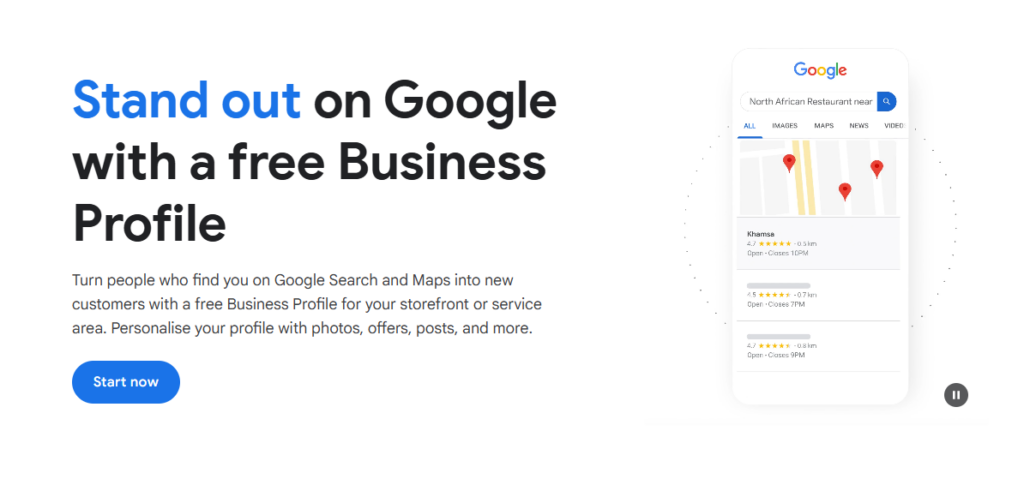
Google Business Profile is a critical platform for local businesses to manage their online presence across Google Search and Maps.
Your profile displays your practice’s fundamental information, including address, phone number, and patient reviews. Since 84% of patients use Google first when making a healthcare decision, keeping this profile accurate and updated is essential.
Vitals
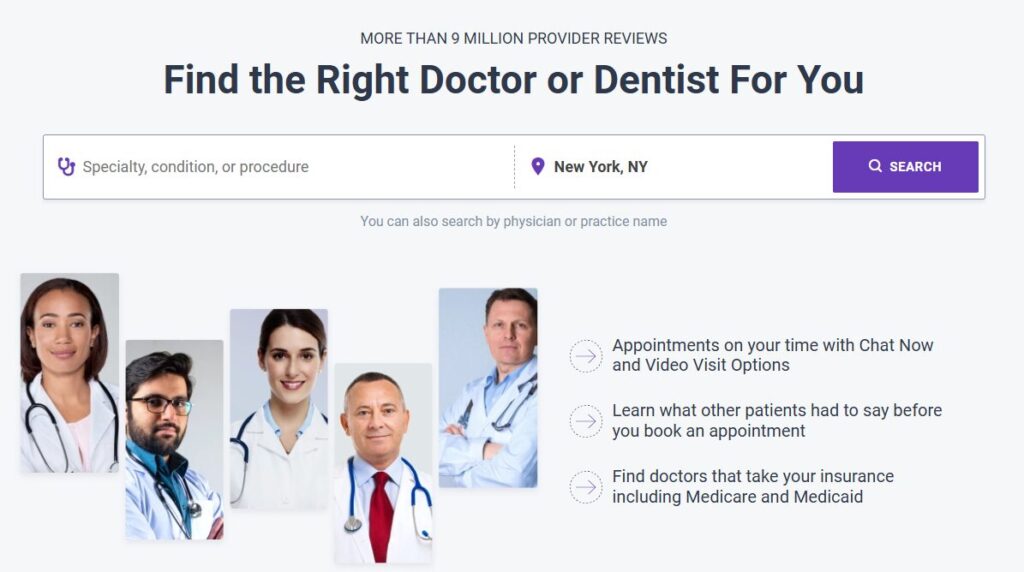
Vitals features millions of reviews for doctors, hospitals, and other health professionals. The site uses a badging system to highlight providers who receive consistently high ratings.
Patients can rate doctors on eight different criteria, including wait time, bedside manner, and accurate diagnosis. Vitals also allows patients to leave reviews anonymously. You can find a provider’s credentials, specialties, hospital affiliations, and educational background on their profile.
HealthGrades
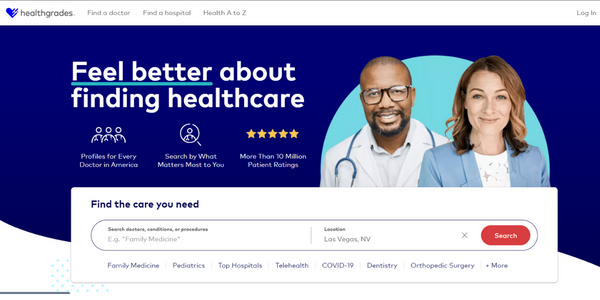
Healthgrades calculates the percentage of patients who would recommend a specific doctor to friends and family. This helps new patients quickly gauge provider satisfaction.
Users can sort a list of local professionals by location, gender, quality of reviews, and accepted insurance plans. The site also shows a doctor’s hospital affiliations, office locations, and languages spoken by their staff.
WebMD
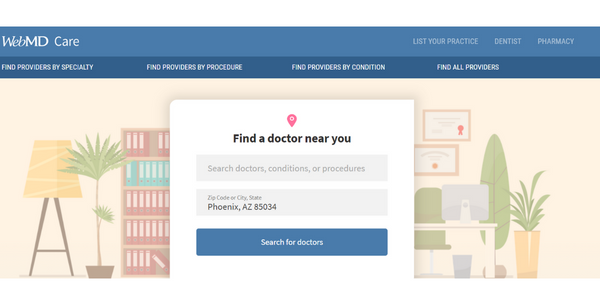
WebMD offers a large directory of hospitals and physicians. It combines factual information with public forums, allowing users to find local healthcare providers using ratings and online reviews.
Like with other review sites, you should check that your information is correct, complete, and current. Ensure all of your practice locations are listed, as many WebMD searches are filtered by region.
RateMDs
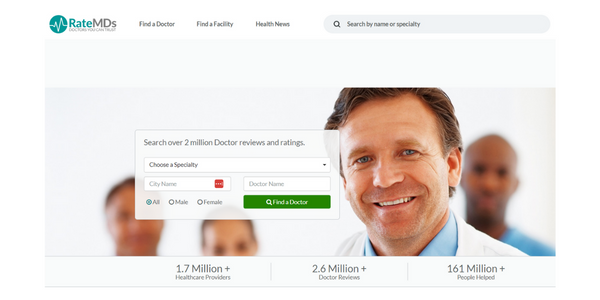
RateMDs allows patients to rate healthcare providers on a five-star scale. The ratings are broken down into four specific categories: staff, punctuality, helpfulness, and knowledge.
On this site, you can see a provider’s most recent review, their average rating, and the total number of ratings they have received. Searches can be narrowed down by a doctor’s gender, location, and specialty.
Yelp
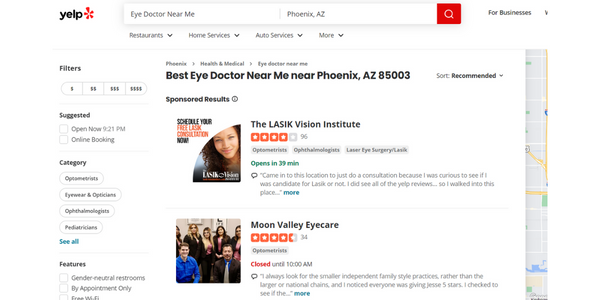
Yelp is a popular business review site that now includes extensive reviews for offices, hospitals, and doctors. In fact, 59% of patients use Yelp when researching their healthcare options.
Yelp’s algorithm automatically evaluates each review based on credibility, usefulness, and user activity. You can use the Yelp website or app to search for a provider and read about other patients’ experiences.
ZocDoc
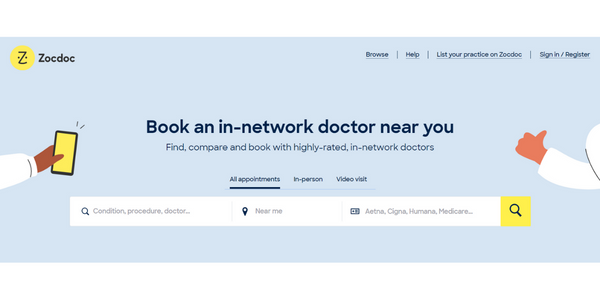
On Zocdoc, you can search for doctors by specialty, services, location, and credentials. Patients can also book appointments directly through the platform.
Zocdoc uses a “closed-loop” review system. This means review invitations are only sent to patients after they have completed an appointment, ensuring all feedback comes from verified patients.
RealSelf
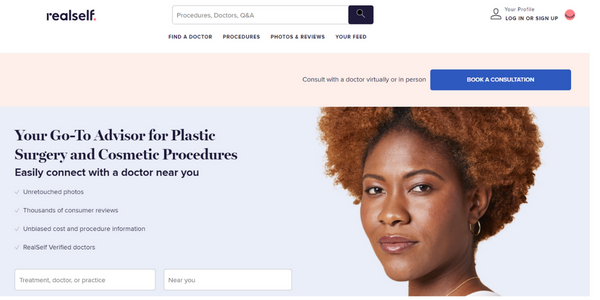
RealSelf is a community platform focused on aesthetic treatments like plastic surgery and dermatology. Patients use the site to discuss procedures and review doctors. It features over 3 million reviews and photos from consumers.
The platform includes a doctor directory organized by region, treatment type, and specialty. Importantly, doctors featured on RealSelf cannot pay to alter or remove consumer reviews, which helps maintain trust.

With billions of users worldwide, Facebook is one of the largest online review platforms. Many healthcare providers enable reviews on their official Facebook pages to gauge patient satisfaction.
Because most people already have an account, leaving a review on Facebook is simple and quick. This makes it easy for prospective patients to find your practice and read feedback from your community.
How to Manage Online Review Sites
Managing your online reputation involves more than just collecting reviews. It requires a clear strategy for how to respond to feedback and use it to improve your practice. This process is often called online reputation management (ORM).
Negative reviews can feel alarming, but they offer an opportunity to demonstrate your commitment to patient care. Responding professionally is effective; 65% of patients who leave a negative review report being satisfied by the practice’s response. However, it can take around 40 positive reviews to undo the damage of a single negative one.
Follow these steps to manage reviews on the top doctor review sites.
1. Create a review management plan
First, decide how and when you will ask patients for reviews. Never use unethical tactics like buying fake reviews, as this can damage your credibility.
Make it easy for patients to leave feedback. Include links to your preferred review sites in emails, text message follow-ups, and on your website.
2. Respond to all online reviews
Plan how your team will handle both positive and negative reviews. Acknowledge every review promptly, but some will require more attention than others.
If a patient is upset about appointment scheduling, offer help and a solution. If they bring up a personal health issue, direct them to contact your office privately. Thank every reviewer for their time, and be consistent in your response process.
3. Protect patient health information
When responding to a public review, you must follow HIPAA regulations. HIPAA (the Health Insurance Portability and Accountability Act) is a federal law that protects sensitive patient health information from being disclosed without the patient’s consent or knowledge.
Even if a patient shares their own medical details in a public forum, your practice is forbidden from confirming or discussing that information online. Always ask the patient to call your office to discuss their concerns privately and confidentially.
Improve Your Patient Experience Today

Whether you are a new healthcare provider or not, more and more people are turning to the internet to gather valuable information about practices and find doctors.
Providers must constantly create patient experience strategies that are captivating and go beyond generating improved health outcomes in order to inspire loyalty and foster preference. The first step in doing this is establishing your presence on the top doctor review sites and monitoring patient feedback.
Contact us today for help with reputation management, social media, SEO, and more.
FAQs
Why are online reviews important for my medical practice?
Online reviews are crucial because most patients use them as the first step in choosing a new doctor. They build trust with potential patients, provide valuable feedback for improving your services, and can significantly boost your online visibility, helping you attract new business.
What is the most important review site for doctors?
While all the sites listed are valuable, your Google Business Profile is often the most critical. Since the majority of patients start their search on Google, having an updated profile with positive reviews there can make the biggest impact on your local visibility and SEO for your medical practice.
How should I handle a negative review?
Respond to negative reviews promptly and professionally. Acknowledge the patient’s concern without violating HIPAA privacy rules. Offer to resolve the issue offline by asking them to contact your office directly. A thoughtful response shows that you value patient feedback and are committed to improving their experience. This is a key part of online reputation management.
Is it okay to ask patients to leave a review?
Yes, it is ethical and recommended to ask patients for reviews. The key is to ask for honest feedback, not just positive reviews. You can make it easy for them by sending a follow-up email or text message with a link to your preferred review site after their appointment.
Do I need to claim my profile on all these websites?
It’s a good idea to claim your profile on the platforms most relevant to your specialty and location. Start with the most important ones, like Google Business Profile, Healthgrades, and Vitals. Ensuring your information is accurate across these sites is essential for a strong online presence.
How can I use reviews to improve my practice?
Patient feedback is a powerful tool. Look for recurring themes in your reviews, both positive and negative. If multiple patients mention long wait times or a helpful staff member, you can address operational issues or recognize outstanding employees. Using this feedback helps you create a better patient experience and can lead to a more successful medical practice.
Need help with marketing strategy?
Get a custom strategy built on clinical experience — not generic marketing playbooks.
