Key Takeaways
- Google holds medical aesthetics sites to a high trust standard because they affect health decisions
- Target both ready-to-book searches and research-phase searches for a balanced keyword strategy
- Optimize your Google Business Profile since most patients live within 15 miles of your clinic
- Create content covering rising trends like Gen Z prejuvenation and weight loss drug patients
- Rename and tag before-and-after photos properly so they appear in Google Image results
The medical aesthetics industry is growing fast, and GLP-1 agonists are a big reason why. These weight loss drugs could hit $100 billion in sales by 2030. As people lose weight, they want new ways to feel great about how they look. Many of them are walking into aesthetic clinics for the very first time.
Growth brings competition, though. You’re not just competing with the med spa down the street anymore. You’re up against dermatologists, plastic surgeons, and national chains.
To keep your appointment book full, you need more than a beautiful website. You need a modern marketing strategy that puts search visibility first. This guide breaks down exactly how to rank your medical aesthetic clinic in 2025.
Table of Contents
Years ago, you could count on word of mouth.
Today, patients go to Google and social media first.
If your clinic doesn’t show up on the first page of search results, you’re invisible to thousands of potential clients. A strong SEO strategy for medical practices puts your clinic in front of people right when they’re searching for services like “Botox,” “coolsculpting,” or “lip fillers.”
Modern SEO isn’t just about keywords. It’s about trust. Patients research treatments on TikTok and Instagram, then go to Google to find a safe, reputable provider. Your website needs to connect those two steps.
E-E-A-T in Medical Aesthetics
Medical aesthetics falls under a special category in Google’s algorithm called YMYL (Your Money or Your Life). Because your services affect a person’s health and well-being, Google holds your healthcare website to a higher standard than a regular business site. To rank high, you need to show E-E-A-T: Experience, Expertise, Authoritativeness, and Trustworthiness.
- Medical directors front and center. Every page should clearly show who supervises your treatments. Build detailed bio pages for your medical director and practitioners.
- Cite medical sources. When writing about procedures, link to reputable medical journals or studies. This proves your content is accurate.
- Showcase credentials. Display badges, certifications, and awards in your website footer and on your “About Us” pages so visitors see them right away.
A high-quality website is the foundation of your SEO strategy.
Once your site is fast and mobile-friendly, you need to put these core tactics to work:
Don’t just guess what people are searching for.
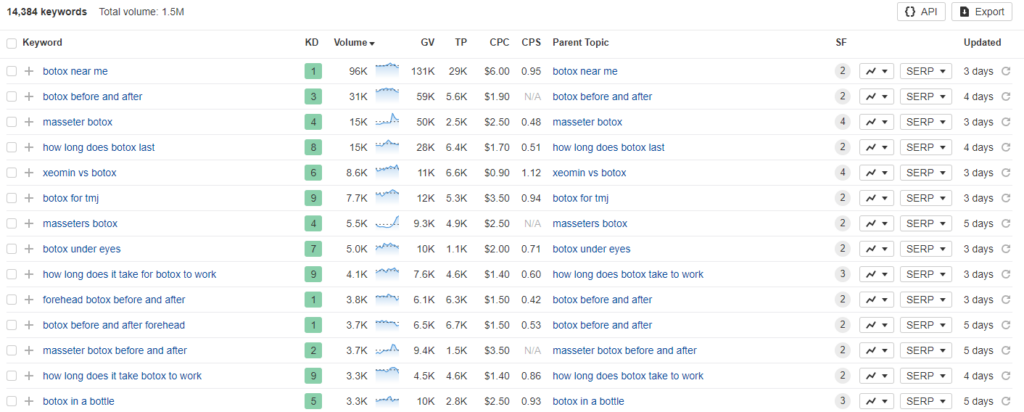
Use SEO tools like SEMrush or Ahrefs to find the exact words your future patients type into Google. With these tools, you can discover and target:
- Transactional keywords are searches by people ready to book right now.
- Examples:
- “Botox near me”
- “Lip filler cost [City Name]“
- “Best med spa in [City Name]”
- Examples:
- Informational keywords are searches by people researching treatments.
- Examples:
- “How long does Dysport last?”
- “Does microneedling hurt?”
- Examples:
To capture leads right away, you might also consider pairing organic efforts with Google Ads.
Blogging is still one of the best ways to get traffic.
But you have to do it the right way. Effective content marketing uses a topic cluster strategy.
- Create a core service page. This is your main page for a service (like “Laser Hair Removal”). It should be designed to sell.
- Write supporting blog posts. Write 3 to 5 blog posts that answer specific questions about that service (like “Laser Hair Removal for Dark Skin” or “Pre-Care Instructions”).
- Link them together. Link all those blog posts back to your main service page. This tells Google you’re an authority on that topic.
Most of your patients live within 10 to 15 miles of your clinic.
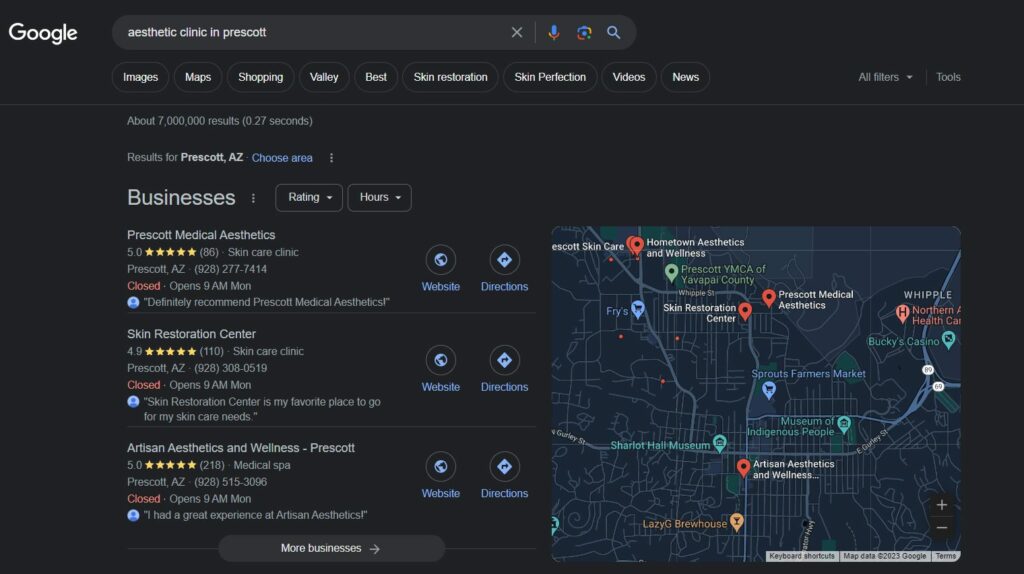
You need to dominate the Local Map Pack (the map section at the top of Google results). This is the heart of local SEO. Here’s how to optimize for that:
- Claim your profile. Make sure you own your Google Business Profile.
- Keep your NAP consistent. Your Name, Address, and Phone number must be exactly the same on your website, your Google Profile, and your social media pages.
- Get reviews. Encourage happy patients to leave 5-star reviews. This is a key part of reputation managemen. Reply to every review, even the negative ones.
- Use the Q&A section. Fill in the “Q&A” area of your profile with common patient questions and clear answers.
GET IN TOUCH
Get 30 New Patients in 60 Days
Your practice doesn’t need more clicks.
It needs patients in chairs and revenue on the books.
We’ll build you a full patient acquisition system—HIPAA-compliant, clinician-approved, and tied to results you can actually measure.
3 Treatment Trends to Focus On
The typical aesthetic patient is changing. To stay ahead, your SEO content should target specific, growing groups of people.
1. Prejuvenation
Gen Z is now a major buyer. In 2024, 53% of Gen Z consumers said they spent more on aesthetic procedures than the year before. Build content around “preventative” treatments, often called prejuvenation.
2. Medical Weight Loss
Weight loss drugs are reshaping the industry. Data shows that 40% of patients receiving GLP-1 treatments are completely new to aesthetic practices.
- Strategy: Create pages dedicated to “Medical Weight Loss” and link them to complementary treatments like skin tightening or body contouring.
3. Regenerative Aesthetics
Patients are moving toward “natural” results. The market for regenerative injectables (like biostimulators) is projected to grow rapidly through 2033.
- Strategy: Write content explaining how treatments like Sculptra or PRF work to regenerate your body’s own collagen, rather than just filling in lines.
Medical aesthetics is a visual industry.
Potential patients want to see results. Google Images can send a ton of traffic to your site if you optimize your photos the right way.
- Rename your files. Never upload an image named “IMG_1234.jpg.” Rename it to something like “lip-filler-before-after-dallas-tx.jpg.”
- Use alt text. Add a short description to every image. This helps Google understand the photo and makes your site more accessible for visually impaired users.
- Create galleries. Build dedicated “Before and After” gallery pages for each treatment category.
How do you know your SEO is doing well?
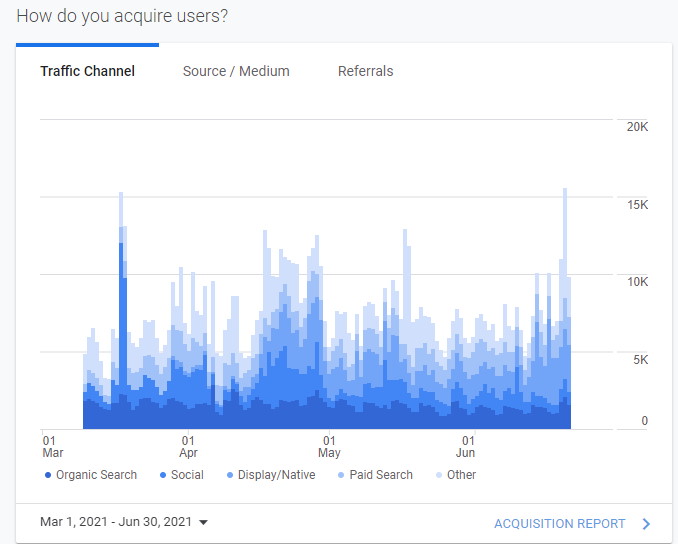
Traffic is good, but revenue is better. You need to track the numbers that actually help your business grow.
Track these key performance indicators (KPIs)
Don’t just look at how many people visit your site. Look at what they do once they get there.
- Conversion rate: The percentage of visitors who become leads.
- Phone calls: Track how many calls come directly from Google Search.
- Form fills: Monitor how many “Book Now” or “Contact Us” forms get submitted.
- Keyword rankings: Track your position for your most profitable services (like “Morpheus8 near me”).
Pay attention to algorithm updates
Google changes its rules often. A tactic that worked two years ago might hurt your rankings today. To prepare for the future of SEO, audit your site regularly so you stay competitive and up to date.
A generic marketing strategy isn’t enough.
You need a partner who understands the unique challenges of medical regulations, patient privacy, and local competition.
Partner with Digitalis Medical and unlock real visibility in both traditional search engines and AI. Contact us today.
GET IN TOUCH
Get 30 New Patients in 60 Days
Your practice doesn’t need more clicks.
It needs patients in chairs and revenue on the books.
We’ll build you a full patient acquisition system—HIPAA-compliant, clinician-approved, and tied to results you can actually measure.
Frequently Asked Questions
Why is SEO considered “Your Money or Your Life” (YMYL) for med spas?
Google classifies medical aesthetics websites as YMYL because the content and services you offer can directly affect a person’s health, safety, and well-being. Because of this, Google’s algorithms hold these sites to a much higher standard of quality. To rank well, your site needs to show strong E-E-A-T (Experience, Expertise, Authoritativeness, and Trustworthiness) by citing medical sources and highlighting your medical directors’ credentials.
What’s the difference between transactional and informational keywords?
Transactional keywords are used by people who are ready to book a service right now, like “Botox near me” or “Lip filler cost Dallas.” Informational keywords are used by people in the research phase who are asking questions like “Does microneedling hurt?” or “How long does Dysport last?” A balanced SEO strategy targets both. Informational content builds trust, while transactional content drives revenue.
How can I improve my clinic’s ranking in the Google Local Map Pack?
To dominate the Local Map Pack, you need to first claim and verify your Google Business Profile. Make sure your Name, Address, and Phone number (NAP) are the same everywhere, including your website and all social platforms. Actively gather 5-star reviews from happy patients, reply to all reviews, and use the Q&A section of your profile to answer common patient questions.
What is a “topic cluster” strategy in aesthetic marketing?
A topic cluster strategy means you create one big “Core Service Page” designed to sell a specific treatment (like Laser Hair Removal) and then support it with 3 to 5 related blog posts (like pre-care instructions or treatment for specific skin types). By linking all those supporting blogs back to the main service page, you show Google that your clinic is an authority on that subject. That boosts your rankings.
How should I optimize “Before and After” photos for SEO?
You can turn your patient results into traffic sources by optimizing your image files. Instead of uploading generic file names like “IMG_1234.jpg,” rename them with descriptive keywords like “lip-filler-before-after-dallas-tx.jpg.” Always add descriptive alt text to every image so Google can understand the photo. This also makes your site more accessible for visually impaired users.
How do current trends like GLP-1 drugs affect SEO content strategy?
The rise of GLP-1 weight loss drugs has brought a whole new group of people to aesthetic practices. About 40% of these patients are brand new to the industry. To capture this traffic, build dedicated pages for “Medical Weight Loss” and link them to complementary treatments like skin tightening or body contouring. This helps you reach weight loss patients who are searching for these specific services.
What metrics matter most when measuring SEO success for a clinic?
Website traffic is important, but the numbers that really matter are the ones tied to revenue. Track your conversion rate (the percentage of visitors who become leads), the number of phone calls from Google Search, and form fills for booking requests. Keep an eye on keyword rankings for your most profitable services instead of just broad industry terms.
Need help with hospital marketing?
Get a custom strategy built on clinical experience — not generic marketing playbooks.
