
Key Takeaways
- SOPs ensure consistent, safe, high-quality care across every healthcare team and department.
- Involve frontline staff when drafting SOPs to ensure accuracy and practical relevance.
- Every SOP must include a clear purpose, scope, step-by-step procedures, and approval signatures.
- Review and update SOPs at least annually or immediately after any regulatory change.
- Train all relevant staff thoroughly to guarantee proper and consistent SOP implementation.
Standard operating procedures (SOPs) are essential for ensuring quality and safety in any healthcare organization.
They provide a formal process for every team member, from management to frontline staff. This alignment increases productivity and reduces the risk of errors that could harm patients.
While staff members want to do their job correctly, individual ideas of the “right way” can vary. When a patient’s health is at stake, medical teams must follow the same rules and guidelines to deliver consistent, high-quality care.
This guide explains the key components of healthcare SOPs and provides a step-by-step process for developing them for your own organization.
Table of Contents
What does SOP mean?
An SOP clearly defines who does what, where, when, and how during a specific situation. Following these procedures is a core responsibility for all healthcare professionals, regardless of their field, especially in high-stakes areas like infection control where patient safety is paramount.
The SOPs for one department may not apply to another.
For example, laboratory technicians follow specific guidelines for handling, testing, and disposing of patient samples. Emergency room physicians have distinct SOPs for treating unconscious patients, and operating room nurses follow precise steps when passing instruments to a surgeon.
The Importance of SOPs
SOPs must be tailored to your organization’s specific needs and are part of a continuous quality improvement cycle.
A good system of SOPs helps your medical organization build efficient processes and a positive culture. These procedures support the right people in doing the right tasks under the right circumstances.
As a management tool, SOPs help your practice evaluate its current performance and plan for the future. When everyone understands and follows these documented processes, your team can make better decisions to improve patient care and grow your practice.
A well-written SOP provides several key benefits:
- Consistency: Every staff member performs a task the same way every time, which reduces quality concerns and variability in patient outcomes.
- Fewer mistakes: Following a written, tested procedure consistently lowers the risk of human error.
- Clear communication: SOPs require regular review and updates. This process gives employees a formal opportunity to communicate concerns and suggest improvements.
GET IN TOUCH
Get 30 New Patients in 60 Days
Your practice doesn’t need more clicks.
It needs patients in chairs and revenue on the books.
We’ll build you a full patient acquisition system—HIPAA-compliant, clinician-approved, and tied to results you can actually measure.
The 5 Most Important Healthcare SOPs
Before looking at examples, it is important to understand the development process itself.
How to develop your own SOPs
Creating effective SOPs involves more than just writing down instructions. Following a structured process ensures the final document is clear, useful, and accepted by your team.
- Identify the need: Determine which tasks or processes require a formal SOP. Focus on high-risk, complex, or frequently performed tasks where consistency is critical for safety and efficiency.
- Assemble the right team: Involve the frontline staff who perform the task daily. Their hands-on knowledge is crucial for creating a practical and accurate procedure.
- Draft the procedure: Write a clear, step-by-step guide. Use simple language and define any technical terms. Include the purpose, scope, and responsibilities associated with the SOP.
- Review and test: Have team members and supervisors review the draft. Test the SOP in a real-world setting to identify any gaps, errors, or unclear steps.
- Approve and formalize: Once finalized, the SOP must be formally approved by management or the designated medical director. It should then be assigned a unique number and added to your organization’s document control system.
- Implement and train: Distribute the official SOP to all relevant staff. Conduct training sessions to ensure everyone understands the procedure and its importance.
1. Patient enrollment
The quality of a medical organization is often first judged at the front desk. A clear SOP for patient enrollment ensures the patient’s journey begins smoothly and professionally.
Purpose
To provide maximum comfort and support to patients and their companions during the registration process.
Scope
- Ensuring the front desk team fully understands the entire enrollment process.
- Providing an accurate and smooth patient registration experience.
- Increasing staff productivity and reducing registration errors.
- Giving patients a sense of comfort and confidence upon arrival.
Procedures
The enrollment process is a mandatory first step before treatment. It ensures accurate records and helps track patient volume.
- Collect the patient’s basic information, including name, age, gender, contact details, and emergency contact information.
- Generate a unique patient identification number for their electronic health record (EHR).
- Create and maintain the patient’s file for documentation, ensuring all data is entered correctly.
- Collect any necessary fees for the visit or treatment according to a clear payment policy.
- Inform the patient and their companion about the next steps in their care journey.
Things to remember
- Ensure the patient or their guardian signs all required consent and privacy forms.
- Explain how to use the unique identification number and provide assurance of personal data confidentiality, in line with HIPAA guidelines.
- Perform this process consistently for every patient.
2. Purchase of medicines
A well-functioning healthcare system depends on the reliable availability of safe and effective medicines. Mistakes in purchasing pharmaceuticals can have severe consequences for patient health.
Purpose
To make the medicine purchasing process transparent, efficient, and reliable while ensuring compliance with state and organizational regulations.
Scope
- Documenting and organizing medicines according to established standards.
- Accurately quantifying medicine needs to avoid shortages or waste.
- Selecting appropriate, licensed suppliers.
- Managing and monitoring the procurement system.
- Training all staff involved in the purchasing process.
Procedures
This SOP helps streamline the buying process and control costs.
- Identify medicine needs based on demand data from clinical staff and historical usage.
- Conduct an inventory check of available pharmaceuticals to confirm quantities on hand.
- Select medicines for purchase, prioritizing those on the essential drug list.
- Choose a licensed and reputable supplier through a formal selection process.
- Document all acquired medicines, including name, quantity, cost, and expiration date.
- Monitor procured medicines to track availability and usage rates.
- Use generic (international non-proprietary) names for drugs to prevent confusion.
Things to remember
- Ensure all medicines are FDA-approved and purchased from a licensed supplier.
- Keep all procurement activities within the approved budget.
- Maintain a transparent and fair tender process with no hidden clauses.
GET IN TOUCH
Get 30 New Patients in 60 Days
Your practice doesn’t need more clicks.
It needs patients in chairs and revenue on the books.
We’ll build you a full patient acquisition system—HIPAA-compliant, clinician-approved, and tied to results you can actually measure.
3. Booking consultation appointments
Booking an appointment is a necessary step for maintaining health or addressing medical issues. A poor booking process can confuse and discourage patients before they even see a provider.
Purpose
To provide patients with clear, simple, and consistent procedures for seeking consultations and treatments.
Scope
- Maintaining a positive patient experience during the booking process.
- Assisting patients in understanding the rules and options for scheduling an appointment.
- Reducing staff time spent on manual scheduling and follow-up.
Procedures
Modern healthcare facilities offer multiple integrated options for booking appointments.
- Patient Portals: Patients log into their secure online portal to view provider availability and schedule their own appointments. The system integrates directly with the Electronic Health Record (EHR).
- Telehealth Integration: The SOP should include distinct steps for scheduling virtual visits, ensuring patients receive a secure link and clear instructions for joining the call.
- Automated Reminders: Once an appointment is booked, the system automatically sends SMS or email confirmations and reminders to reduce no-show rates.
- Assisted Scheduling: For patients who call or visit in person, staff use the same centralized system to book the appointment, ensuring all records are up-to-date.
- Information Collection: During booking, the system or staff member collects necessary information, such as the reason for the visit and updated insurance details.
4. Surgical procedures
The operating room is a highly controlled environment where life-saving procedures occur. Strict SOPs are critical for patient safety and procedural success.
Purpose
To ensure every surgical procedure is planned, executed, and documented with the highest level of safety, consistency, and care.
Scope
All hospital staff involved in the surgical process must be aware of the mandatory dos and don’ts before, during, and after an operation. This includes surgeons, anesthesiologists, nurses, and technicians.
Procedures
For non-emergency surgeries, the process typically follows a clear pathway.
- The patient receives a formal surgical recommendation from their doctor during an outpatient visit.
- The patient visits the surgical department to complete a consent form and other paperwork.
- The patient, their doctor, and an operating room representative sign the consent form.
- The patient undergoes pre-operative tests (e.g., blood work, imaging) to confirm they are fit for surgery.
- The responsible surgeon and anesthesiologist review the test results.
- If the patient is cleared, they receive their scheduled date and time for the operation, along with pre-operative instructions.
In an emergency, many of these steps may be bypassed to get the patient into the operating room as quickly as possible.
5. Infection control
Preventing healthcare-associated infections (HAIs) is a fundamental responsibility of every medical facility. An infection control SOP protects both patients and staff.
Purpose
To outline clear, mandatory procedures for preventing the transmission of infectious agents within the healthcare environment.
Scope
This SOP applies to all staff, patients, and visitors within the facility. It covers all aspects of patient care, environmental cleaning, and equipment handling.
Procedures
Key procedures in an infection control SOP include:
Safe Injection Practices: Rules to prevent the transmission of infections through injections and medication administration.
Hand Hygiene: Specific instructions on when and how to wash hands with soap and water or use an alcohol-based hand sanitizer.
Personal Protective Equipment (PPE): Guidelines on the proper selection, use, and disposal of gloves, gowns, masks, and eye protection.
Sterilization and Disinfection: Detailed steps for cleaning, disinfecting, and sterilizing medical instruments and equipment.
Environmental Cleaning: Protocols for routine cleaning and disinfection of patient rooms, common areas, and high-touch surfaces.
What should be included in an SOP?
The exact format of an SOP can vary, but a comprehensive document is always:
- A written document, not passed down by word of mouth.
- Sponsored and signed by management.
- Based on a consistent template.
- Titled and numbered for easy tracking in a document control system.
- Reviewed regularly by the medical director and other authorized staff.
- Archived properly when updated or retired.
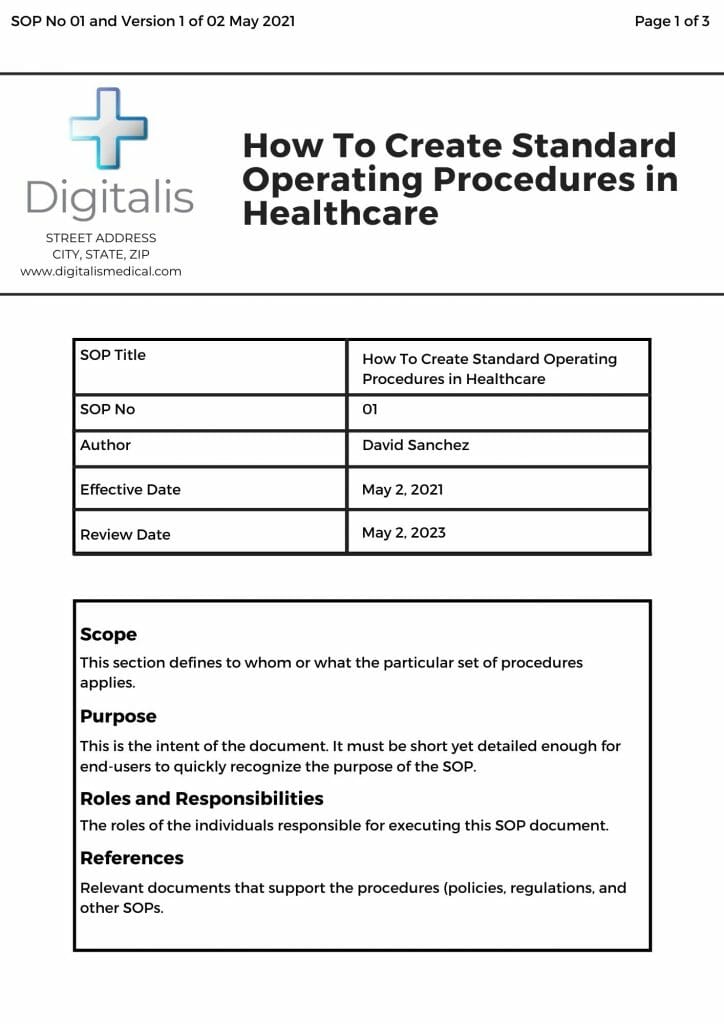
An SOP document generally has two main parts: document control information and the detailed content of the procedure.
Document control information
This section typically appears at the top of the first page and includes:
- Healthcare organization’s logo
- Company name and address
- SOP Title
- SOP Number
- Author or responsible department
- Effective Date
- Review Date (SOPs should be reviewed annually, or whenever regulations like HIPAA change, or after a safety incident, a practice supported by organizations like The Joint Commission).
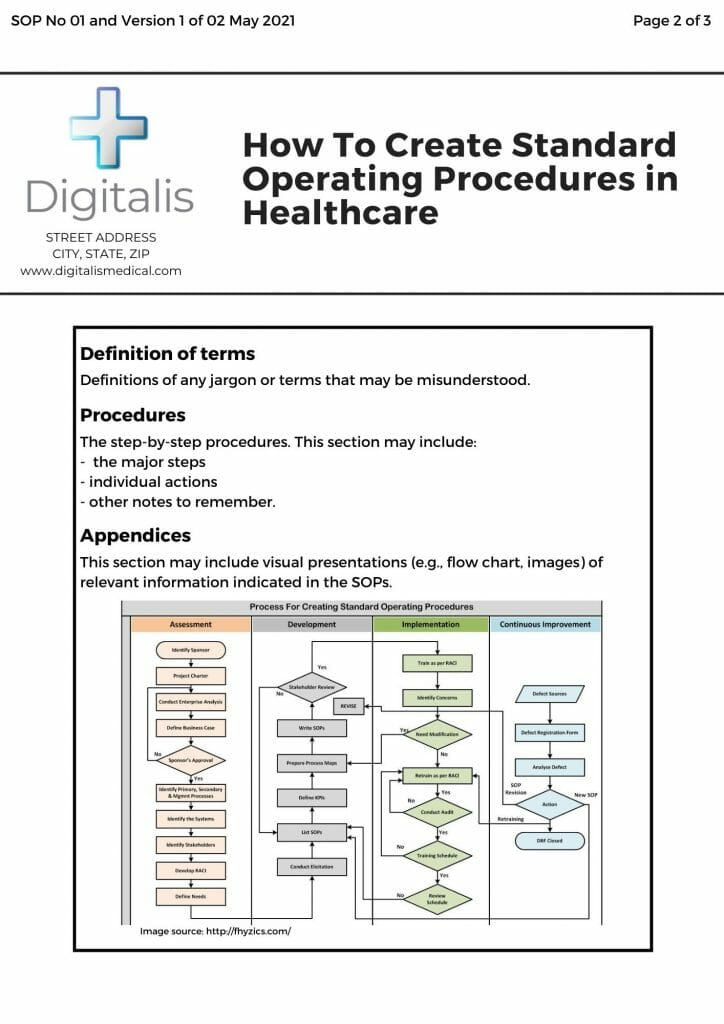
Core SOP content
This is the main body of the document and should contain:
- Purpose: A brief statement explaining why the SOP exists.
- Scope: Defines who and what the SOP applies to.
- Roles and Responsibilities: Clearly lists who is responsible for each step of the procedure.
- Definition of Terms: Explains any acronyms, abbreviations, or technical terms.
- Procedures: The detailed, step-by-step instructions for carrying out the task.
- References: A list of any other documents, regulations, or guidelines related to the SOP, such as standards from JCAHO (The Joint Commission) or Good Clinical Practice (GCP).
- Appendices: Any forms, checklists, or diagrams needed to complete the procedure.
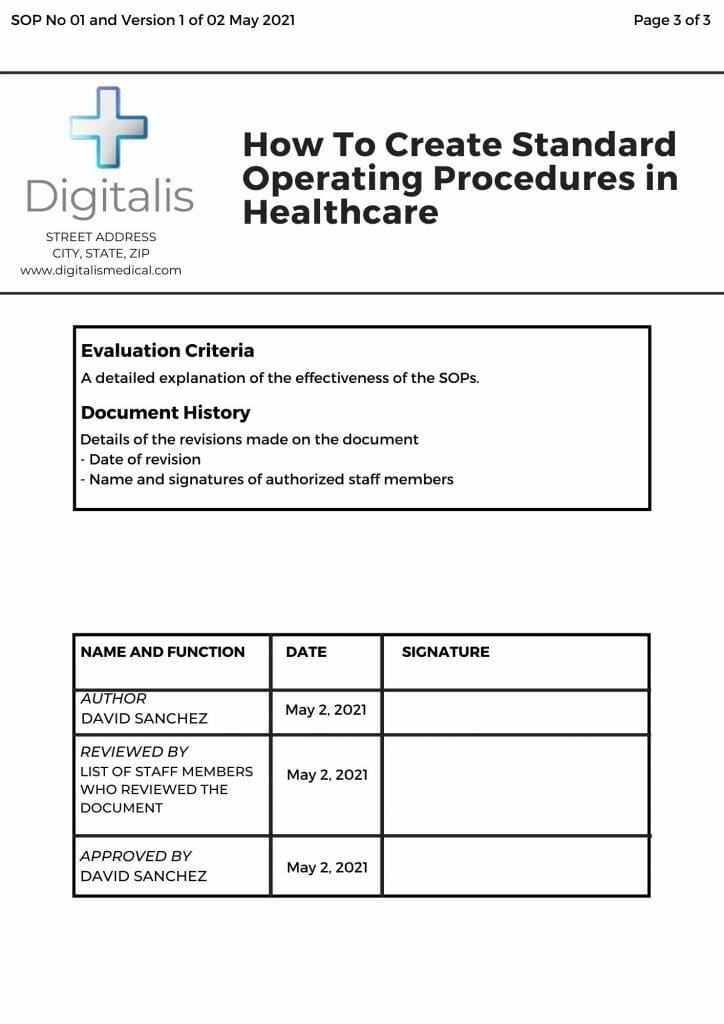
Review and approval
The final section of an SOP provides an audit trail and confirms its official status.
- Document History: A log of previous versions, review dates, and changes made.
- Signatures: The names and signatures of the author, reviewers, and the person with final approval authority.
In most healthcare settings, the medical director is responsible for the final review and approval of clinical SOPs.
Below is a sample template of an SOP document for medical practice.
CLICK HERE: To Download These SOPs in PDF version!
Putting your SOPs into practice

For an industry that deals with people’s lives every day, implementing clear and standard guidelines on how to operate is not just time-efficient and productivity-boosting, it’s also life-saving.
Make sure everyone on your team understands your SOPs. Provide thorough training so they know how to follow all procedures correctly and consistently. Using modern tools, such as patient portals that streamline appointment booking, can aid in successful implementation.
Remember, even the most well-written SOP will fail if it is not properly implemented, followed, and regularly reviewed by your entire team.
GET IN TOUCH
Get 30 New Patients in 60 Days
Your practice doesn’t need more clicks.
It needs patients in chairs and revenue on the books.
We’ll build you a full patient acquisition system—HIPAA-compliant, clinician-approved, and tied to results you can actually measure.
Frequently asked questions
Why are SOPs so important in healthcare?
SOPs are critical because they ensure every task is performed consistently and correctly, which directly impacts patient safety. They reduce the risk of errors, improve the quality of care, and create clear communication channels for staff. This consistency builds trust and is a core part of running a successful medical practice.
Who should write the SOPs for a medical practice?
Creating an SOP should be a team effort. While management or a quality assurance department may lead the process, it is essential to involve the frontline staff who perform the task every day. Their practical knowledge ensures the SOP is accurate, realistic, and easy to follow.
How often should SOPs be reviewed?
SOPs should be reviewed at least once a year. However, they should also be updated immediately whenever a process changes, new regulations are introduced, or after a safety incident occurs. Regular reviews are part of a continuous quality improvement cycle.
What is the difference between an SOP for patient enrollment and one for infection control?
While both aim for consistency, they cover different areas. A patient enrollment SOP focuses on administrative tasks to ensure a smooth patient experience and accurate data collection. An infection control SOP is clinical, focusing on strict safety protocols like hand hygiene and sterilization to prevent the spread of disease.
What are the key elements every SOP document should include?
A complete SOP document should include a clear title and number, effective date, and author. The main content needs to define the SOP’s purpose and scope, list roles and responsibilities, and provide clear, step-by-step procedures. It should also include sections for review history and approval signatures.
How can a medical practice ensure its SOPs are actually followed?
Successful implementation goes beyond just writing the document. It requires thorough training for all relevant staff, making the SOPs easily accessible, and getting buy-in from the team by involving them in the creation process. Management must also lead by example and hold staff accountable. Consistently following procedures is key to building a strong professional image and is a cornerstone of reputation management for doctors.
Need help with marketing strategy?
Get a custom strategy built on clinical experience — not generic marketing playbooks.
